


The Foundations of Toyota Popularity

Toyota is a force to be reckoned with in the global auto industry. They sell over 10 million cars every year, which is enough cars for every man, woman, and child living in New York City. Even here at your local Indiana PA car dealer, you will find lots of Toyota models. Why is Toyota so popular? This mind boggling demand is certainly not an accident and can generally be attributed to three qualities endemic to Toyota vehicles.
The first trait is that famous Toyota reliability. No matter what you buy, new or used, car or truck, people know that it will get you back home if it’s a Toyota. The second trait is low cost. As long as quality and capability aren’t neglected, folks don’t like to spend more than they have to, and with Toyota, they know they are getting the most for their money.
The third trait is advanced engineering. While Toyota is excellent at building all-around reliable and low-cost vehicles, they are also more than capable of performing automotive miracles on the racetrack and in competition. Those three traits are what makes Toyota such a dominant player globally, but there is more to each of them.
Reliability
Toyota’s legendary reliability starts with how they are designed and produced. Historically, most carmakers would only consider production quality as something to improve if it was deficient. This meant that problems in how the cars were assembled on the production line sometimes took months to discover, let alone correct. But from very early on, Toyota actively pursued a policy of baked-in quality, ensuring that their production lines had the vast majority of potential problems sorted out from the beginning. Not only does this result in vehicles with far fewer production errors and thus much greater reliability, but also in lower overall costs, which can be passed on to the buyer.
Another contributing factor to the overwhelming dependability of Toyotas is their tendency to be overbuilt. This essentially means that parts are made noticeably thicker and stronger than they normally would need to be, allowing for much-improved toughness over the life of the vehicle. This was especially true of Toyota products made in the 1980s and 1990s, which were overbuilt to the point where they became noticeably heavier than their more lightly built competitors.
This extra weight may have had some negative effects on performance and economy but essentially let these vehicles last another two or three decades longer and take much larger hits without damaging the vehicle’s backbone. Back when these machines were built, it was the higher performance engines and better technology available on Toyotas that helped make the weight worthwhile, but these days it is the simple fact that they can still be driven without fear.
From the turn of the century onward, Toyota dramatically changed how they overbuilt vehicles, making them significantly lighter while still keeping their legendary toughness. This change effectively boiled down to more intelligent use of materials and more advanced design techniques, taking individual load paths into account through computer modeling. This is a far cry from just making every part tougher and achieves the same result without harming efficiency or performance.
Low Cost
Building a cheap car is easy, but building a cheap car that’s efficient, safe, and reliable is difficult. Toyota has long been an industry leader in building affordable cars that didn’t lack features or reliability. Much of this comes down to the aforementioned methods of increasing production quality, as well as targeting certain points of the market specifically. Toyota might not have an ultra-cheap subcompact on the market in the US, but the compact cars it offers provide impressive features and capability at an affordable price point.
Both Toyota’s new and used vehicles are also affected by economies of scale. Because Toyota builds so many cars every year, it becomes cheaper to make each individual vehicle. In other words, Toyota gets a bulk discount and can pass that on to car buyers. Furthermore, because Toyotas are so common, their prices on the used market allow anyone to buy a reliable and capable vehicle no matter their needs.
Other factors not commonly considered beyond the cost of a car payment and gasoline are upkeep costs. A symptom of Toyotas being overbuilt is that they tend to need less scheduled maintenance, meaning that even a Toyota that has had barely adequate maintenance will function and last like a well-maintained car from another brand. And a well-maintained Toyota will still be going strong decades later.

Solid Engineering
Toyota is mostly known for its reliable and dependable cars and trucks meant for daily use. But the brand’s specialty vehicles are also a big part of what makes the Toyota name so revered. Race fans and car enthusiasts the world over have seen Toyotas compete and claim victory in all the most challenging motorsport disciplines, from drifting and NASCAR to Le Mans and the Baja 1000. As it turns out, dependability is a great trait to have when every component of a racing machine is being pushed to its limit.
All that experience racing and winning have transferred over to the road-bound cars and trucks available to those who aren’t professional drivers. Toyota has built many legendary sports cars over the years, and even the most un-sporty sedan or SUV is made better by Toyota’s motorsports experience. The Toyota Supra, especially the A80 variant of the late 1990s, helped start the tuner explosion of the early 2000s by appearing as the hero car in The Fast and the Furious. Unlike many other cars featured in the film, however, even at the time, there were modified Supras just as quick as the fabled “10-second car” featured in the movie.
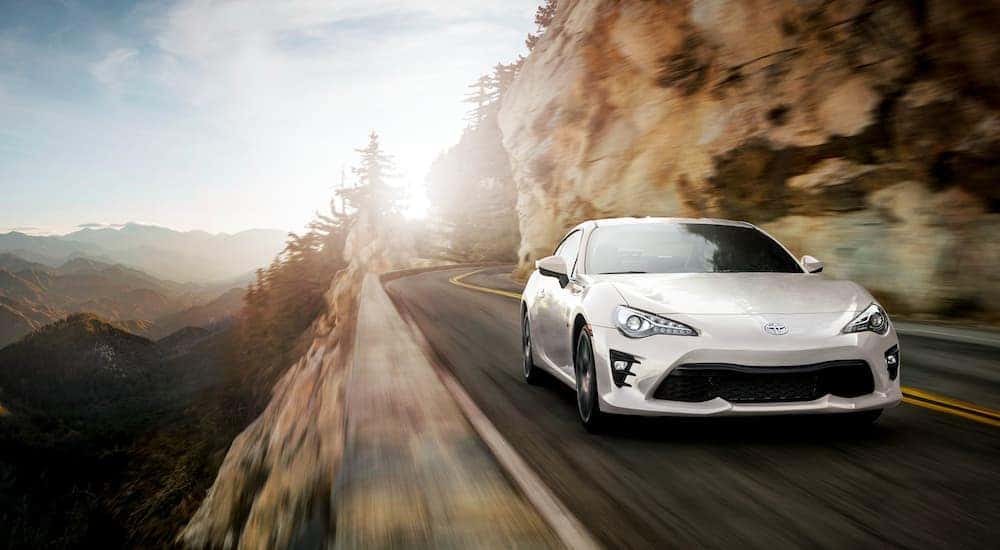
The Celica GT-Four has appeared in several videogames as one of the greatest homologation rally cars of the 1990s, bringing home several wins despite stiff competition from the greatest rally legends of the era. The MR2, in any of its three generations, has been the perfect daily-drivable low-cost sports car for many enthusiasts. Whether one prefers the looks of a 1980s wedge with the AW11 generation, the sleek curves of the 1990s SW20 model, or the friendly face of the final lightweight MR-S variant, the MR2 is the perfect car for the hardcore sports car fanatic. Today, Toyota continues to offer high-performance road cars like the Toyota 86 and the Toyota Supra.
Everyone Loves Toyota
Toyota’s popularity is not based on any single facet of their methodology or even any one vehicle. Toyotas have been incredibly successful in just about every corner of the world and every corner of the automotive industry by combining incredible dependability with affordability and engineering excellence. Each of these elements reinforces the next, ultimately making for some of the world’s best vehicles.
Many seemingly higher-end companies quite simply couldn’t compete with Toyota even if they tried, when it comes to the arenas that Toyota has specialized in. Even then, the challenges and vehicles that Toyota is not known for are often among many of their greatest triumphs and often historical accomplishments. When it comes down to it, the same things that make for a winning Baja 1000 rig or Le Mans prototype are what make a thirty-year-old Toyota Camry start like it just left the showroom floor.
0 comment(s) so far on The Foundations of Toyota Popularity